
The GLP-1 receptor has been localized to numerous CNS nuclei using a combination of receptor autoradiography or in situ hybridization studies. The intriguing studies by Turton, Bloom and colleagues demonstrated that ICV GLP-1 clearly inhibits food intake A role for glucagon-like peptide-1 in the central regulation of feeding. Nature. 1996 4;379(6560):69-72. GLP-1 and its receptor have also been localized to the human CNS, and administration of peripheral GLP-1 to normal human subjects significantly reduces glucose metabolism in the hypothalamus and brainstem as outlined in The expression of GLP-1 receptor mRNA and protein allows the effect of GLP-1 on glucose metabolism in the human hypothalamus and brainstem. J Neurochem. 2005 Feb;92(4):798-806. Although limited human data is available, quantitative assessment of GLP1R expression in the human hypothalamus revelaed significantly reduced expression of the GLP1R in hypothalamic sections from 8 patients with T2DM, compared with non-diabetic controls. GLP1R mRNA transcripts co-localized with mRNA transcripts for POMC, AGRP, or NPY. Considerable inter-individual variation in relative intensity of GLP1R expression was observed. Intense ISH GLP1Rsignal was present in the PVN, supraoptic nucleus (SON), diagonal band of Broca (DBB), ventromedial nucleus (VMN), dorsomedial nucleus (DMN) and nucleus basalis of Meynert (NBM). Staining was also present in the IFN, suprachiasmatic nucleus (SCN), lateral hypothalamic area (LHA), bed nucleus striaterminalis(BST), preoptic area (POA), tuberomamillary nucleus (TMN) and mamillary body (MB). Decreased hypothalamic glucagon-like peptide-1 receptor expression in type 2 diabetes patients J Clin Endocrinol Metab. 2015 Dec 16:jc20153291
CNS GLP-1 is synthesized largely in the brainstem and transported along axonal networks to diverse CNS regions, including the hypothalamus. Proglucagon+ neurons have been characterized in transgenic mice expressing a yellow fluorescent reportein protein under the control of the proglucagon promoter. These neurons did not rerspond directly to GLP-1, ghrelin, or PYY and did not express the GLP-1 or Y2 receptor. Leptin however caused depolarization in these neurons. Leptin directly depolarises preproglucagon neurons in the nucleus tractus solitarius Diabetes. 2010 Jun 3. [Epub ahead of print].
Human studies GLP-1 and the CNS
In humans, GLP-1 does not seem to activate the SNS other than transiently. However Bharucha and colleagues infused GLP-1 into fasted non-diabetic healthy human volunteers, and observed increases in muscle sympathetic nerve activity, without changes in heart rate or blood pressure, as assessed by peroneal nerve micorneurography 60 minutes after GLP-1 administration. See Effects of glucagon-like peptide-1, yohimbine, and nitrergic modulation on sympathetic and parasympathetic activity in humans Am J Physiol Regul Integr Comp Physiol. 2008 Sep;295(3):R874-80. Intriguingly, treatment of patients with type 2 diabetes with the DPP-4 inhibitor vildagliptin for 1 week, 100 mg daily, was also associated with a significant postprandial increase in plasma norepinephrine, consistent with sympathetic nervous system activation, as outlined in Dipeptidyl-peptidase-IV inhibition augments postprandial lipid mobilization and oxidation in type 2 diabetic patients J Clin Endocrinol Metab. 2009 Mar;94(3):846-52.
Gejl and colleagues infused GLP-1 peripherally into 10 fasted non-diabetic human male subjects under conditions of a hyperglycemic clamp, and assessed brain glucose transport with or without GLP-1, by PET scanning, in a crosover design. Plasma glucose levels were ~8.7-9 mM, plasma GLP-1 levels were increased to ~ 125 pM, an dinsulin levels more than tripled, despite simultaneous somatostatin infusion. Glucose infusion rates rose significantly with GLP-1 infusion, whereas intracerebral glucose concentrations were reduced significantly in multiple brain regions, associated with increases in net glucose clearance. The authors speculate that reduced intracerebral glucose levels may be neuroprotective under conditions of ischemic injury Glucagon-like peptide-1 decreases intracerebral glucose content by activating hexokinase and changing glucose clearance during hyperglycemia J Cereb Blood Flow Metab. 2012 Aug 29. doi: 10.1038/jcbfm.2012.118
Daniele and colleagues examined the effects, using tracer and PET imaging techniques, of a single acute postprandial 5 ug exenatide injection in male human subjects, 10 IFG/IGT, 2 IGT and 3 newly discovered T2DM. Exenatide increased the rate of cerebral glucose metabolism and glucose uptake in the postprandial state in multiple brain areas, specifically; total gray matter, total cortex and collectively in the brain areas involved in glucose homeostasis regulation (frontal, occipital, temporal, parietal lobes, limbic system, insula, putamen) and food reward system (orbitofrontal lobe, thalamus, anterior and posterior cingulate), in the presence of low insulin levels (likely due to acute inhibition of gastric emptying) but decreased hypothalamic glucose uptake Exenatide Regulates Cerebral Glucose Metabolism in Brain Areas Associated with Glucose Homeostasis and Reward System Diabetes. 2015 Jun 26. pii: db141718.
Complementary studies used functional MRI to acutely assess the brain response to intravenous placebo, exenatide alone, with or without the antagonist exendin(9-39), in the presence of a somatostatin pituitary clamp, on 3 separate visits, to anticipation and receipt of chocolate milk vs. tasteless solution in obese T2DM patients, normoglycaemic obese and lean subjects (n=48). Exenatide decreased anticipation of receipt of chocolate milk, paralleled by reductions in food intake, demonstrating that GLP-1 receptor activation decreases anticipatory food reward Brain reward-system activation in response to anticipation and consumption of palatable food is altered by GLP-1 receptor activation in humans Diabetes Obes Metab. 2015 Jun 12.
Exenatide and Parkinson's disease
Avilees-Olmos and colleagues carried out a single blind randomized controlled trial, 21 subjects assigned to received exenatide (5 ug twice daily for 1 month, then 10 ug twice daily for 11 months), and 24 control subjects. Regular Parkinson's disease medication was continued for the duration of the trial. Randomization was stratified by baseline disability scores. Exenatide therapy produced a mean improvement of 2.7 points on the standardized MDS-UPDRS scale, whereas controls had a mean decline of 2.2 points. This improvement persisted as assessed 2 months later off drug. Improvements were also noted in the Mattis dementia rating scale in exenatide-treated patients but no change was detected in the Montogomery Asberg depression rating scale. 3/21 exenatide patients dropped out of the study, vs 1 from the conventional therapy control group and weight loss and nausea were more common with exenatide. Exenatide and the treatment of patients with Parkinson’s disease J Clin Invest. doi:10.1172/JCI68295
A second study examined the actions of once weekly exenatide vs. placebo for 48 weeks, followed by a 12 week wash out period in human subjects, ages 25–75 years, already treated with dopaminergic agonists, with evidence that the efficacy of therapy was weaning. The primary outcome was the adjusted difference in the Movement Disorders Society Unified Parkinson’s Disease Rating Scale (MDS-UPDRS) motor subscale (part 3) defined off-medication state at 60 weeks. Subjects treated with exenatide improved modestly, whereas placebo-treated subjects deteriorated by 2.1 points. Exenatide once weekly versus placebo in Parkinson’s disease: a randomised, double-blind, placebo-controlled trial The Lancet Aug 3 DOI: http://dx.doi.org/10.1016/S0140-6736(17)31585-4
GLP-1R signaling in the CNS regulates peripheral glucose homeostasis
Brain GLP-1R signaling also appears to control glucose flux in muscle and liver. Under conditions of a hyperglycemic hyperinsulinemic clamp, intracerebroventricular administration of the specific GLP-1 receptor antagonist Exendin 9-39 (Ex9) increased muscle glucose utilization and glycogen content in mice. This effect did not require muscle insulin action as it also occurred in muscle insulin receptor KO mice. Conversely, icv infusion of the GLP-1 receptor agonist Exendin-4 (Ex4) reduced insulin-stimulated muscle glucose utilization. In hyperglycemia achieved by intravenous infusion of glucose, icv Ex-4, but not Ex9, caused a four-fold increase in insulin secretion and enhanced liver glycogen storage. However, when glucose was infused intragastrically, icv Ex9 infusion lowered insulin secretion and hepatic glycogen, with no effects of icv Ex-4. Furthermore, central blockade of l blockade of GLP-1R signaling or peripheral administration of the antagonist Ex9 improved insulin sensitivity in mice. These findings provide further evidence linking GLP-1R signaling or peripheral administration of the antagonist Ex9 improved insulin sensitivity in mice. These findings provide further evidence linking GLP-1 action in the brain with the peripheral control of glucose flux, insulin sensitivity and insulin secretion as described in Brain glucagon-like peptide-1 increases insulin secretion and muscle insulin resistance to favor hepatic glycogen storage. J Clin Invest. 2005 Dec 1;115(12):3554-3563
Complementary studies examined the regions of the CNS important for GLP-1R-dependent control of glucose homeostasis. Blockade of arcuate GLP-1 receptors by central injection of the antagonist des-His1-Glu8-exendin-4 increased glycemic excursion during an IPGTT in rats whereas injection of GLP-1 into the arcuate nucleus reduced plasma glucose excursion. These actions of the GLP-1 antagonist were not associated with changes in insulin secretion however administration of GLP-1 into the third ventricle did increase insulin secretion during peripheral glucose loading. The GLP-1R+ cells colocalized with POMC+ cells in the acuate nucleus. Intriguingly, the central effects of GLP-1 on glucose production and glucose uptake were blocked by concomitant central administration of glibenclamide. See Arcuate GLP-1 receptors regulate glucose homeostasis but not food intake Diabetes published online on May 16, 2008 as 10.2337/db07-1824
Burgmeister and colleagues examined the role of CNS GLP-1R signaling in the conrol of hepatic insulin sensitivity and insulin secretion in high fat fed insulin resistant WT mice. Unlike the paradoxical findings obtained with whole body Glp1r-/- mice that exhibit enhanced insulin sensitivity, CNS blockade of GLP-1R signaling in HF fed mice impaired hepatic insulin action, whereas icv GLP-1 enhanced insulin-mediated suppression of hepatic glucose production and hepatic Akt phosphorylation. Central GLP-1 activation also reduced liver, but not WAT, muscle or plasma triglyceride levels. Modulation of central GLP-1R signaling had little effect on glucose uptake in muscle, heart or brain. Central GLP-1 activation also potentiated oral glucose-stimulated insulin secretion. Modulation of central GLP-1R signaling had no effect on hypothalamic AMPK phosphorylation during an insulin clamp, whereas icv GLP-1 did inhibit acute insulin-stimulated AMPK phosphorylation. Acute activation of central Glp1 receptors enhances hepatic insulin action and insulin secretion in high fat-fed, insulin resistant mice. Am J Physiol Endocrinol Metab. 2011 Nov 15.
Central administration of GLP-1 also controls peripheral lipid deposition in rodents. icv GLP-1 reduced lipid storage in peripheral adipose tissue. These actions ere dependent in part on sympathetic nervous system activity and were diminished in mice lacking beta-adrenergic receptors and blunted in DIO mice. Direct control of peripheral lipid deposition by CNS GLP-1 receptor signaling is mediated by the sympathetic nervous system and blunted in diet-induced obesity J Neurosci. 2009 May 6;29(18):5916-25
Neuroprotection, learning and memory in the CNS
Does GLP-1 receptor activation mediate neuronal damage in the CNS? A study in rats infused with an exendin (5-39) GLP-1R antagonist demonstrated decreased neurotoxicity following infusion with beta amyloid protein. See Brain Res 2000 Sep 29;878(1-2):194-198. Administration of the human GLP-1R agonist liraglutide once daily for 8 weeks to APP/PS1 mice that develop features of Alzheimer's disease produced functional improvements in memory and behavioral tests, increased synaptic plasticity and reduced evidence of neuronal damage, plaque, and oligomer formation in the CNS of the transgenic mice. The authors postulate that liraglutide exerts its actions in part via direct brain penetration The diabetes drug liraglutide prevents degenerative processes in a mouse model of Alzheimer's disease. J Neurosci. 2011 Apr 27;31(17):6587-94
Treatment of mice with a mutation in the Huntington disease gene (N17182Q) with exendin-4 once dailyproduced improvements in blood glucose, islet pathology, motor performance, and increased longevity. Exendin-4 reduced the accumulation of huntingtin aggregates in both the brain and pancreas. Whether these observations are due to direct GLP-1 receptor activation in target tissues, or indirect effects on improved metabolic parameters or weight loss, cannot be determined. See Exendin-4 Improves Glycemic Control, Ameliorates Brain and Pancreatic Pathologies and Extends Survival in a Mouse Model of Huntington's Disease Diabetes November 4, 2008 as 10.2337/db08-0799. Similarly, both GLP-1 and exendin-4 promoted neuronal survival in cultured neurons in vitro, reduced brain damage following ischemic injury, and preserved levels of dopamine and improved motor improvement in a murine model of Parkinson's disease. The majority of these actions were found to be dependent on intact GLP-1R signaling as they were diminished by the antagonist exendin(9-39) and extinguished in cells and mice with genetic elimination of the GLP-1 receptor. See GLP-1 receptor stimulation preserves primary cortical and dopaminergic neurons in cellular and rodent models of stroke and Parkinsonism Proc Natl Acad Sci U S A. 2009 Jan 21. [Epub ahead of print].
In related studies, peripheral administration of exendin-4 to mice reduced neuronal degeneration and decreased markers of inflammation in the CNS. Exendin-4 protects dopaminergic neurons by inhibition of microglial activation and matrix metalloproteinase-3 expression in an animal model ( 1-Methyl-4-phenyl-1,2,3,6-tetrahydropyridine (MPTP) of Parkinson's disease. Exendin-4 protects dopaminergic neurons by inhibition of microglial activation and matrix metalloproteinase-3 expression in an animal model of Parkinson's disease. J Endocrinol. 2009 Jul 1. [Epub ahead of print]
Repeated twice daily administration of exendin-4 to normoglycemic Sprague Dawley rats for 7 days reduced infarct volume and reduced neurological deficit after middle cerebral artery occlusion; levels of oxidative stress in the brain were also reduced by exendin-4, whereas levels of glutathione and SOD were increased. The neuroprotective effects of exendin-4 were not independently evident when co-administered with the endothelin A receptor antagonist BQ123. Repeated administration of exendin-4 reduces focal cerebral ischemia-induced infarction in rats Brain Res. 2011 Oct 19.
The GLP-1 receptor is expressed in the subventricular zone of the rat brain and administration of GLP-1 or exendin-4 in vitro increased the number of neural stem/progenitor cells and the expression of neuronal markers. Moreover peripheral administration of exendin-4 increased cell proliferation in the CNS, and exendin-4 treatment for 3 weeks improved functional and histological parameters of disease activity in in the 6-hydroxydopamine model of Parkinson's disease. See Peptide hormone exendin-4 stimulates subventricular zone neurogenesis in the adult rodent brain and induces recovery in an animal model of parkinson's disease. J Neurosci Res. 2007 Sep 5; [Epub ahead of print]
The GLP-1 receptor may also be important for CNTF-mediated cell proliferation in the murine CNS. CNTF induced proglucagon gene expression and cell proliferation in the murine hypothalamus through mechanisms that required intact GLP-1R signaling. see Ciliary neurotrophic factor recruitment of glucagon-like peptide-1 mediates neurogenesis, allowing immortalization of adult murine hypothalamic neurons FASEB J. 2009 Aug 24. [Epub ahead of print].
A follow-up study from the Greig lab demonstrated that GLP-1, and exendin-4, can completely protect cultured rat hippocampal neurons against glutamate-induced apoptosis, and both GLP-1 and exendin-4 reduced ibotenic acid-induced depletion of choline acetyltransferase immunoreactivity in rat basal forebrain cholinergic neurons. Similarly, GLP-1 can reduce the levels of amyloid-beta peptide (Abeta) in the brain in vivo and reduced levels of amyloid precursor protein (APP) in cultured neuronal cells. Furthermore, GLP-1 and exendin-4 protect cultured hippocampal neurons against death induced by Abeta and iron See Glucagon-like peptide-1 decreases endogenous amyloid-beta peptide (Abeta) levels and protects hippocampal neurons from death induced by Abeta and iron. J Neurosci Res. 2003 Jun 1;72(5):603-12.
Hence, these results suggests that GLP-1 action in the brain may be neuroprotective, perhaps via activation of anti-apoptotic signaling pathways in specific neurons. See Protection and reversal of excitotoxic neuronal damage by glucagon-like Peptide-1 and exendin-4. J Pharmacol Exp Ther. 2002 Sep;302(3):881-8
During and colleagues have shown, using a variety of gene therapy, and peptide-based technologies, that activation of CNS GLP-1R signaling enhances associative and spatial learning through GLP-1R. These investigators used a novel N-terminal exendin-4 derivative, [Ser(2)]exendin(1-9), which when administered peripherally, gains access to the CNS, and activates the CNS GLP-1R system. GLP-1R-deficient mice exhibit a learning deficit phenotype which is restored after hippocampal GLP-1R gene transfer. Furthermore, gain of function studies in rats over-expressing the GLP-1R in the hippocampus show improved learning and memory. GLP-1R-deficient mice also have enhanced seizure severity and neuronal injury after kainate administration, with correction after GLP-1R gene transfer in hippocampal somatic cells. Systemic administration of the GLP-1R agonist peptide [Ser(2)]exendin(1-9) in wild-type animals prevents kainate-induced apoptosis of hippocampal neurons.See Glucagon-like peptide-1 receptor is involved in learning and neuroprotection. Nat Med. 2003 Sep;9(9):1173-9
GLP-1, aversive stimulation, stress and the CNS
Although the data linking GLP-1 to inhibition of food intake are quite solid, it is also important to consider a role for GLP-1 in the CNS response to aversive stimuli. A link between GLP-1 and the stress response was first suggested, albeit indirectly, by studies from Larsen and colleagues who demonstrated that ICV GLP-1 activated hypothalamic CRH+ neuroendocrine neurons leading to increased corticosterone secretion in rats Central administration of glucagon-like peptide-1 activates hypothalamic neuroendocrine neurons in the rat. Endocrinology. 1997 138(10):4445-55
More recent experiments have confirmed the intricate anatomical association between GLP-1R+ nerve terminals in neuronal projections that abut CRH+ neurons in the hypothalamic PVN, as described in Glucagon like peptide-1 (7-36) amide (GLP-1) nerve terminals densely innervate corticotropin-releasing hormone neurons in the hypothalamic paraventricular nucleus. Brain Res. 2003 Sep 26;985(2):163-8
A series of experiments from Randy Seeley, David D'Alessio and their colleagues next demonstrated that many of the aversive effects of Lithium chloride administration in rats are blocked by ICV preadministration of exendin (9-39), the GLP-1 receptor antagonist, as illustrated in J Neurosci 2000 Feb 15; 20(4):1616-21 The role of CNS glucagon-like peptide-1 (7-36) amide receptors in mediating the visceral illness effects of lithium chloride.
Intriguingly however, although lithium chloride also activated proglucagon/GLP-1+ cells in the mouse NTS, the GLP-1R does not appear to be essential for transduction of LiCl-induced anorexia or a CTA in mice, as demonstrated in studies using either the antagonist exendin(9-39), or GLP-1R-/- mice. These findings demonstrate considerable species-specificity with respect to the role of central GLP-1R signaling pathways in components of the aversive response, as described in The role of central glucagon-like Peptide-1 in mediating the effects of visceral illness: differential effects in rats and mice. Endocrinology. 2005 Jan;146(1): 458-62.
To localize the CNS regions responsive to GLP-1 that mediate the anorexic versus visceral illness (CTA) effects of GLP-1, Kinzig and colleagues injected various doses of GLP-1 into the lateral or 4th ventricle of rats. Both sites could transduce a GLP-1 signal linked to food intake, whereas only GLP-1 instilled into the lateral ventricle evoked a CTA response. The central nucleus of the amygdala was identified as a key GLP-1R+ site important for the response to visceral illness. These findings illustrate the compartmentalization of the CNS GLP-1R response to differential CNS inputs as outlined in The diverse roles of specific GLP-1 receptors in the control of food intake and the response to visceral illness. J Neurosci. 2002 Dec 1;22(23):10470-6. Similar experiments demonstrated that the endocrine component of the stress response is activated following GLP-1 injection into the hypothalamic PVN, whereas the anxiety response is induced by GLP-1 administration in the central nucleus of the amygdala. See CNS glucagon-like peptide-1 receptors mediate endocrine and anxiety responses to interoceptive and psychogenic stressors. J Neurosci. 2003 Jul 16;23(15):6163-70
Studies from the Rinaman lab corroborate the GLP-1-mediated activation of stress-related signaling pathways in the CNS. The data in Interoceptive stress activates glucagon-like peptide-1 neurons that project to the hypothalamus. Am J Physiol. 1999 Aug;277(2 Pt 2): R582-590 demonstrates that LiCl, LPS and CCK activate GLP-1 neurons, whereas the same neurons are not activated following ingestion of a large meal. A similar story emerges in A functional role for central glucagon-like peptide-1 receptors in lithium chloride-induced anorexia. Am J Physiol. 1999 Nov;277(5 Pt 2):R1537-40. Central infusion of the GLP-1 antagonist exendin (9-39) increases the febrile response to LPS, suggesting that GLP-1R signaling may normally function to attenuate the response in vivo. See Antagonism of central glucagon-like peptide-1 receptors enhances lipopolysaccharide-induced fever. Auton Neurosci. 2000 Dec 20;85(1-3):98-101. Analysis of the specific regions of the brain important for mediating the aversive effects of LPS demonstrated that the caudal brainstem GLP-1R is important for transducing the reduction in food intake observed following LPS administration. See Attenuation of Lipopolysaccharide Anorexia By Antagonism of Caudal Brainstem But Not Forebrain GLP-1-R. Am J Physiol Regul Integr Comp Physiol. 2004 Jul 1
Complementary studies in mice demonstrate that several behavioral tests that reflect anxiety, as well as the corticosterone response to stress, are abnormal in the absence of intact GLP-1R signaling. Neuroendocrine function and response to stress in mice with complete disruption of glucagon-like peptide-1 receptor signaling. Endocrinology. 2000 Feb;141(2):752-62.
GLP-1R agonists also acutely modulate the HPA axis in human subjects as GLP-1 administration increased cicrculating cortisol in non-diabetic humans subjects or subjects with T1DM. Similarly, GLP-1R activation using GLP-1 or exendin-4 increased ACTH and both corticosterone and aldosterone in freely moving or anesthetized rats. Remarkably, the effect of exendin-4 on stimulation of corticosterone in rats was comparable to that observed following administration of ACTH. The effect of exendin-4 on corticosterone was demonstrated in the fed or fasted state and persisted in non-diabetic and diabetic rodents. See GLP-1(7-36)-amide and Exendin-4 Stimulate the HPA Axis in Rodents and Humans Endocrinology. 2010 Apr 2. [Epub ahead of print]
Peripheral Nervous System
Studies using the rat PC12 pheochromocytoma cell line, which expresses the GLP-1 receptor, suggest that GLP-1 agonists promote neurite outgrowth and NGF-induced differentiation, and may enhance cell survival following withdrawal of NGF, depending on the timing of exendin-4 administration. The differentiation actions of GLP-1 were abrogated by the kinase inhibitors LY294002 or PD98059, but the PKA inhibitor H-89 had only modest effects on these actions. Hence, these findings suggest that GLP-1R signaling, perhaps independent of PKA activation, may be neurotrophic in the correct cellular context. See A novel neurotrophic property of glucagon-like Peptide 1: a promoter of nerve growth factor-mediated differentiation in PC12 cells. J Pharmacol Exp Ther. 2002 Mar;300(3):958-66. The GLP-1R has also been localized to the dorsal root ganglion and sciatic nerve of rats, and in Schwann cells of the murine sciatic nerve. Exposure of a rat pancreatic preparation or sciatic nerve cultured ex vivo to GLP-1 resulted in increased ERK1/2 phosphorylation in diabetic nerve tissue and non-diabetic pancreas, actions blocked by exendin(9-39). Treatment of diabetic mice with exendin-4 for 8 weeks prevented the reduction in nerve conduction velocity and intraepidermal nerve fibre profiles associated with experimental diabetes. GLP-1 signals via ERK in peripheral nerve and prevents nerve dysfunction in diabetic mice Diabetes Obes Metab. 2011 Jun 2. doi: 10.1111/j.1463-1326.2011.01431.
Himeno et al examined the effects of GLP-1R in the peripheral nervous system of diabetic mice. GLP-1R+ neurons ere detected in the dorsal root ganglion and the consequences of daily exendin-4 treatment (for 4 weeks) was examined. GLP-1R activation with native GLP-1 or exendin-4 promoted neural outgrowth of DRG neurons in vitro and exendin-4 improved peripheral nerve function, assessed by neurometric analysis of nerve conduction in diabetic mice. Beneficial Effects of Exendin-4 on Experimental Polyneuropathy in Diabetic Mice Diabetes published ahead of print August 1, 2011, doi:10.2337/db10-1462
Does GLP-1 acting on the brain arise centrally, or does peripheral GLP-1 also signal the CNS?
Peripheral administration of GLP-1 is taken up into the CNS, as illustrated in Interactions of glucagon-like peptide-1 (GLP-1) with the blood-brain barrier. J Mol Neurosci. 2002 Feb-Apr;18(1-2):7-14. Administration of the radiolabelled protease-resistant analogue [Ser8]GLP-1, revealed uptake of this peptide into the CNS that was not saturable, nor competed by wildtype GLP-1 or the GLP-1 receptor antagonist exendin(9-39), suggesting that the GLP-1 receptor is not involved in the rapid entry into brain. [Ser8]GLP-1 was detected within the brain parenchyma, but a large proportion was loosely associated with the vasculature at the BBB. These studies demonstrate that a radiolabelled GLP-1 analogue can enter the brain, but whether GLP-1 needs to enter the brain to affect food intake of gut motility, remains unclear. Similar studies using CD1 mice have demonstrated that exendin-4 readily crosses the blood brain barrier, even more efficiently than native GLP-1, as illustrated in Entry of exendin-4 into brain is rapid but may be limited at high doses. Int J Obes Relat Metab Disord. 2003 Mar;27(3):313-318. Similarly, Hunter administered liraglutide and lixisenatide to mice and asessed brain peptide content at various time points using a GLP-1 ELISA for liraglutide and two GLP-1-related ELISAs for lixisenatide. Considerable background immunoreactivity for GLP-1 peptide content was easily detected in the absence of injected peptide for both peptides, and immunoreactivity was significantly higher in the brain after the respective peptides were administered peripherally. Total brain cAMP content was also significantly higher after both peptides. Drugs developed to treat diabetes, liraglutide and lixisenatide, cross the blood brain barrier and enhance neurogenesis BMC Neurosci. 2012 Mar 23;13:33. doi: 10.1186/1471-2202-13-33
Chemogenetic approaches have been used to selectively activate Gcg neurons in the hindbrain, following which a range of CNS actions ascribed to pharmacologically administered GLP-1 was examined. Chemogenetic stimulation with a chemical ligand recapitulated only a subset of the actions previously ascribed to centrally or peripherally administered proglucagon-derived peptides (mostly GLP-1). Notably, food intake, metabolic rate, and glucose production was reducedin lean animals. In contrast, no effect was found on corticosterone secretion, anxiety, conditioned taste aversion (CTA), or body weight. Moreover, in mice with diet-induced obese (DIO), the chemogenetic reduction of hepatic glucose production was lost, whereas the suppression of food intake was maintained, resulting in weight loss. These results further build a story for the physiological importance of endogenous hindbrain-derived GLP-1 in the control of food intake. Activation of murine pre-proglucagon–producing neurons reduces food intake and body weight JCI Feb 20 2017
Does GLP-1 need to penetrate the brain to activate central GLP-1R-dependent networks?
The available data suggests that peripheral administration of native GLP-1 or GLP-1R agonists activates GLP-1R receptors in the brain coupled to c-fos activation, inhibition of food intake, activation of the HPA axis, and potentially, induction of an aversive stress response. Endogenous GLP-1 is also synthesized in the brain, and peripheral GLP-1 communicates with central GLP-1 networks in the CNS. One approach to assess the extent to which peripheral GLP-1 signals regulate CNS GLP-1 activity involves the use of larger hybrid GLP-1-albumin proteins which retain the ability to activate GLP-1 receptor signaling, yet do not readily cross the blood brain barrier. Albugon, a recombinant-GLP-1 protein, lowers blood glucose and enhances insulin secretion in mice, and stimulates GLP-1R-dependent cAMP accumulation in cells expressing the GLP-1 receptor. Remarkably, Albugon also activates c-fos expression in multiple regions of the central nervous system, and inhibits food intake in mice following both icv and peripheral administration. For an overview of the data, see A Recombinant Human Glucagon-Like Peptide (GLP)-1-Albumin Protein (Albugon) Mimics Peptidergic Activation of GLP-1 Receptor-Dependent Pathways Coupled With Satiety, Gastrointestinal Motility, and Glucose Homeostasis. Diabetes. 2004 Sep;53(9):2492-500.
Similar conclusions can be inferred from studies of the mechanisms of action of CJC1134, an exendin-4:albumin conjugate, on the pancreas, gut and CNS in WT and Glp1r-/- mice. Although high molecular weight CJC1134 does not appear to rapidly traverse the blood brain barrier and directly engage central GLP-1 receptors, peripheral administration of CJC1134 rapidly activates c-FOS in multiple regions of the CNS. Moreover, CJC1134 promotes satiety and inhibits gastric emptying in a GLP-1R-dependent manner, and chronic administration is associated with weight loss in mice. Hence, these findings provide further evidence supporting the importance of ascending GLP-1R-dependent neural signals for transmission of responses controlling satiety and gut motility in vivo. See An albumin-exendin-4 conjugate engages central and peripheral circuits regulating murine energy and glucose homeostasis Gastroenterology 2008, do1:10.1053/j.gastro.2008.01.017
Several studies have examined the role of the vagus nerve in the trasnmission of anoerctic and glucoregulatory signals pursuant to GLP-1R activation, using chemical or surgical techniques to interrupt vagal transmission. For example, see Peripheral exendin-4 and peptide YY(3-36) synergistically reduce food intake through different mechanisms in mice Endocrinology. 2005 Sep;146(9):3748-56.
Hayes and colleagues assess the importance of subdiaphragmatic versus selective hepatic vagotomy for GLP-1 action in rats. The common hepatic branch of the vagus was not required for the anorectic or the glucoregulatory actions of GLP-1 whereas subdiaphragmatic vagotomy significantly impaired GLP-1 action on glucose tolerance and food intake The common hepatic branch of the vagus is not required to mediate the glycemic and food intake suppressive effects of glucagon-like-peptide-1 Am J Physiol Regul Integr Comp Physiol. 2011 Aug 17.
Varin and colleagues studied how small peptide (exendin-4) and larger GLP-1R agonists (albiglutide, dulaglutide) control CNS-dependent functions such as gastric emptying, food intake and body weight. The CNS or autonomic nervous system was not required for GLP-1R-dependent control of glucose homeostasis. Widespread hypothalamic knock down of the GLP-1R in brainstem and hypothalamus attenuated the actions of GLP-1R agonists to inhibit gastric emptying and food intake. Moreover, loss of the GLP-1R in the Wnt1 domain abrogated the glucoregulatory actions of low dose-gut selective DPP-4 inhibition. However loss of GLP-1R in the Wnt1 domain had no physiological consequences for glucose control or body weight. In contrast, loss of the GLP-1R in autonomic neurons targeted by Phox2b resulted in profound perturbations in control of gastric emptying, islet hormones, circulating levels of GLP-1 and glucose homeostasis. Phox2b+ GLP-1Rs also mediate a component of the weight loss effects of GLP-1R agonists Distinct Neural Sites of GLP-1R Expression Mediate Physiological versus Pharmacological Control of Incretin Action Cell Rep. 2019 Jun 11;27(11):3371-3384.e3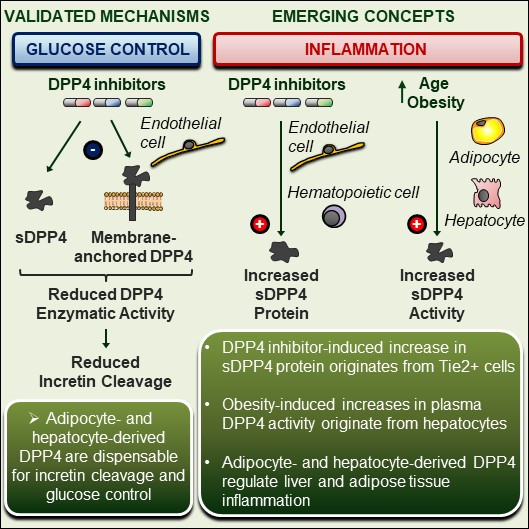
Central and peripheral cardiovascular effects of GLP-1
Studies from the Blazquez laboratory have demonstrated that both icv and peripheral GLP-1 administration increase heart rate and blood pressure in rats. See Changes in arterial blood pressure and heart rate induced by glucagon-like peptide-1-(7-36) amide in rats. Am J Physiol. 1994 Mar;266(3 Pt 1):E459-66 and Interactions of exendin-(9-39) with the effects of glucagon-like peptide-1-(7-36) amide and of exendin-4 on arterial blood pressure and heart rate in rats. Regul Pept. 1996 Nov 14;67(1):63-8 and Neural contribution to the effect of glucagon-like peptide-1-(7-36) amide on arterial blood pressure in rats. Am J Physiol. 1999 Nov;277(5 Pt 1):E784-91.
Similar observations have been made in calves Cardiovascular and pancreatic endocrine responses to glucagon-like peptide-1(7-36) amide in the conscious calf. Exp Physiol. 1997 Jul;82(4):709-16. The hypertensive and chronotropic actions of GLP-1 in the rat are evident even in the setting of hypovolemia, and associated with further augmentation of circulating vasopressin and oxytocin, as shown in Effects of glucagon-like peptide-1(7?36) amide on neurohypophysial and cardiovascular functions under hypo- or normotensive hypovolaemia in the rat. J Endocrinol. 2002 Feb;172(2):303-310
Even moderate doses of GLP-1R agonists at levels not sufficient to lower blood glucose result in activation of central sympathetic neurons and adrenal medullary chromaffin cells that produce catecholamines. Centrally and peripherally administered GLP-1R agonists including native GLP-1 and the lizard peptide exendin-4 dose-dependently increased blood pressure and heart rate in rats. GLP-1R activation induced c-fos expression in the adrenal medulla and neurons in autonomic control sites in the rat brain, including medullary catecholamine neurons providing input to sympathetic preganglionic neurons. Furthermore, GLP-1R agonists rapidly activated tyrosine hydroxylase transcription in AP neurons which express the GLP-1R, as shown in Glucagon-Like Peptide-1-Responsive Catecholamine Neurons in the Area Postrema Link Peripheral Glucagon-Like Peptide-1 with Central Autonomic Control Sites. J Neurosci. 2003 Apr 1;23(7):2939-2946. These findings suggest that the central GLP-1 system represents a regulator of sympathetic outflow leading to downstream activation of cardiovascular responses in the rodent, and are consistent with previous reports demonstrating that GLP-1R systems function as a component of neural networks transducing the CNS response to aversive stimuli. See Glucagon-like peptide-1 receptor stimulation increases blood pressure and heart rate and activates autonomic regulatory neurons J. Clin. Invest. 2002;110 43-52
Cabou and colleagues examined the CNS mechanisms through which GLP-1 regulates blood flow in mice. Exendin-4 promoted translocation of PKC-d, but not the other PKC isoforms, to the plasma membrane in an exendin(9-39)-dependent manner and these actions were absent in Glp1r-/- mice. Central GLP-1R activation reduced femoral blood flow and peripheral insulin sensitivity, findings reversed by central infusion of calphostin C, a non-specific PKC inhibitor. Conversely, Glp1r-/- mice exhibited increased femoral artery blood flow and insulin sensitivity. The specific PKC-d inhibitor rottlerin reversed the effects of central exendin-4 on blood flow and insulin sensitivity. Experimental diabetes was associated with reduced blood flow and insulin sensitivity, findings that were reversed by central infusion of the antagonist exendin(9-39). Hence central GLP-1R signaling regulates blood flow and peripheral insulin sensitivity in a PKC-d-dependent manner. Brain GLP-1 Signaling Regulates Femoral Artery Blood Flow and Insulin Sensitivity Through Hypothalamic PKC-δ Diabetes published ahead of print August 1, 2011, doi:10.2337/db11-0464
ICV GLP-1 has also been shown to increase fecal output in rats, and these actions were blocked by treatment with either exendin (9-39) or the CRF receptor antagonist, astressin. Hence, these findings provide yet another link between GLP-1 actions in the CNS, stress, and the CRH pathway. Peripheral GLP-1 administration did not effect fecal output. Glucagon-like peptide (GLP-1) is involved in the central modulation of fecal output in rats AJP - GI 2000 278: G924-G929
What is the connection between leptin and GLP-1 in the CNS? Data from the Bloom laboratory suggests that GLP-1 may be downstream of leptin action in the brain. Indeed, studies from Elias and Elmquist show that leptin activates a subset of GLP-1 neurons in the brainstem Chemical characterization of leptin-activated neurons in the rat brain. Elias CF, Kelly JF, Lee CE, Ahima RS, Drucker DJ, Saper CB, Elmquist JK. Nevertheless, GLP-1 receptor signaling is not required for leptin action in the CNS, as illustrated in studies of the ob/ob:GLP-1R-/- mouse. Elimination of GLP-1R signaling does not modify weight gain and islet adaptation in mice with combined disruption of leptin and GLP-1 action Diabetes 2000 49:1552-1560
To review data on the control of food intake, see GLP-1 and food intake